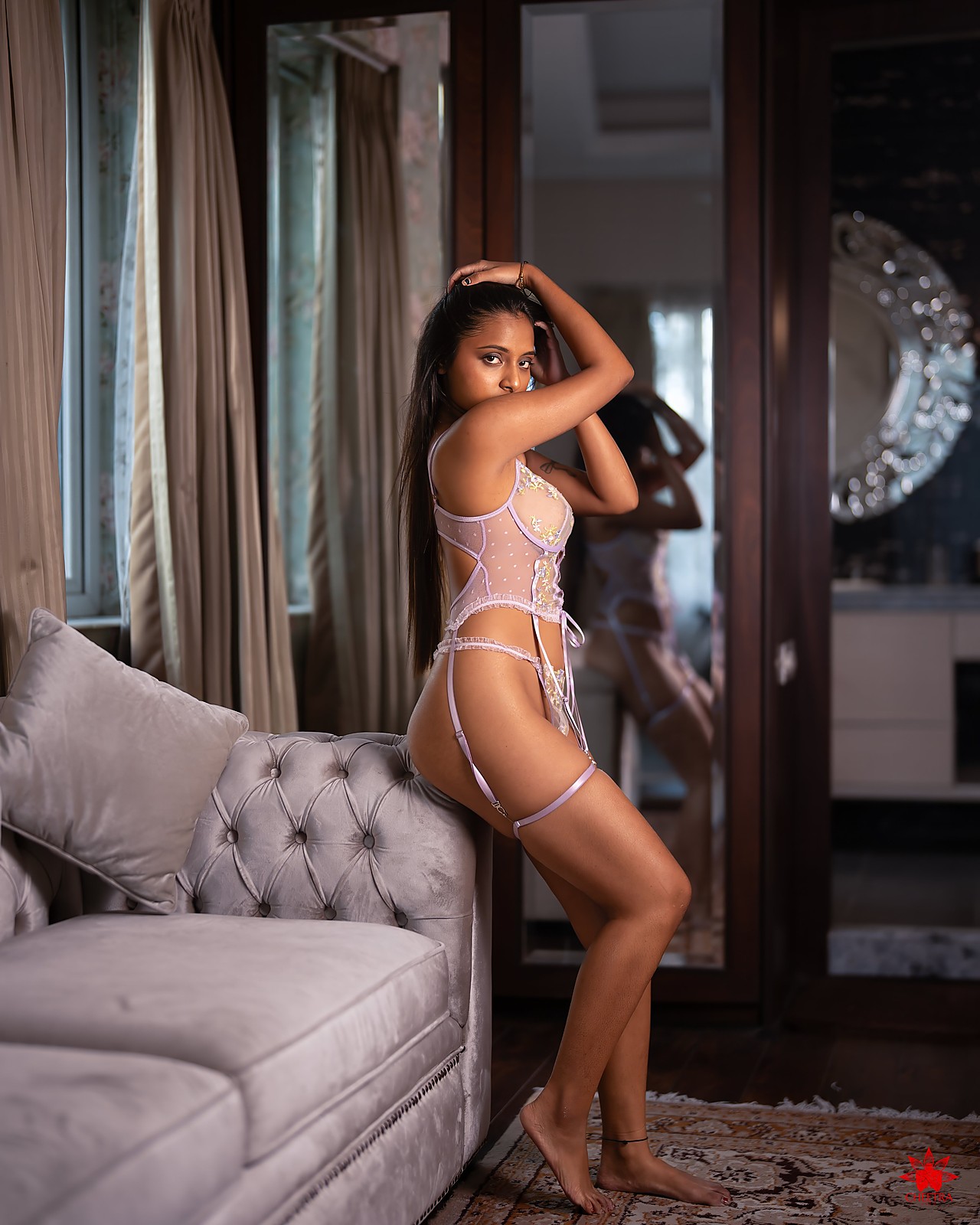
Portrait posing with hands works best when the gesture has a purpose. A hand may frame the face, continue the line of an arm, touch the setting or suggest movement. Problems begin when a model is asked only to put a hand somewhere and hold it. Fingers become evenly spread, wrists lock and shoulders rise. The photographer’s task is to give a small action that can produce a believable shape, then make the picture before that action turns into a frozen instruction.
This is a timely visual question. Wallpaper’s 29 August 2026 feature on Bruce of Los Angeles describes how his Rodeo photographs moved away from studio performance toward people photographed at ease in their own environments. The work and Cheetraview’s boudoir portraits belong to different histories and subjects, so it should not be copied as a style reference. Its useful lesson is narrower: visible ease often comes from allowing a person to inhabit a setting rather than imposing a complicated story on every gesture.
Museum interpretation supports that idea. The National Portrait Gallery’s analysis of Jonangelo Molinari’s portrait of Ncuti Gatwa explains how raised hands, a tilted head and expression add movement and confidence to a close composition. MoMA’s archive for Gesture and Pose similarly notes that bodily attitudes can communicate both intended and unintended messages. Together, these sources suggest a practical test: the hands should support what the face and body are already saying, not compete with them.
Sreeja’s official Cheetraview cover offers a clear SFW studio example. She stands beside a grey tufted sofa in pale lilac embroidered styling, with one hand resting over her hair and the other arm bent near her face. Mirror-lined panels repeat part of the pose behind her. These are visible details from the photograph and verified model page. They do not establish the original direction, lens, timing or a fictional mood that the studio never recorded.
Start a standing portrait with balance before directing the hands. Ask the model to place weight comfortably through one leg, soften the other knee and settle the shoulders. Take a neutral frame with the arms relaxed. That baseline reveals how the model naturally holds fingers and wrists. From there, offer one change at a time: bring a hand toward the hair, follow the jawline without pressing it, or let fingertips meet a stable surface. Avoid rebuilding the entire pose after every exposure.
For a raised-arm pose, watch the route from shoulder to fingertip. A lifted elbow can create a strong diagonal, but it may also hide an eye, compress the neck or pull the garment. Shift the camera or lower the elbow slightly before asking the model to endure an awkward position. Direct the palm edge rather than the flat palm toward the camera when you want a lighter shape. Keep fingers gently separated, then invite a tiny movement so they do not look arranged at identical angles.
Use verbs instead of geometry. ‘Trace the hairline’, ‘rest the fingertips’ and ‘turn the wrist slowly’ are easier to perform than a list of joint positions. Make several frames during the transition, because the convincing photograph may appear between two planned poses. Show one useful preview and ask what feels comfortable. In boudoir photography in India, movement, wardrobe coverage and the intended public crop should be agreed before continuing; a dynamic pose is never more important than consent and physical ease.
Check the background whenever hands move. In Sreeja’s portrait, the mirrors and dark vertical frames create secondary shapes, so the raised arms need clean separation from those lines. Look for fingers merging into hair, bright jewellery touching a highlight or a reflection that appears to add another limb. For cinematic portrait photography, dramatic light can emphasise those overlaps. A small camera-height change is often better than retouching a confusing silhouette later.
Finish with three usable variations: one calm pose, one gesture with visible movement and one closer frame led by expression. Keep the strongest public image SFW and carry the correct Sreeja credit, including her recorded alias Srija where it genuinely helps discovery. The Cheetraview homepage, lookbook and Sreeja profile show the wider Kolkata boudoir photography context. To explore current public previews and membership information, visit the official Cheetraview Patreon page when it suits you.
Current sources