Portrait photography in 2026 is moving toward images that feel atmospheric, personal and unmistakably human. Cinematic light remains important, but the strongest photographs are no longer defined by polish alone. They hold attention because the expression, styling and environment feel connected to a real person and a real place.
At Cheetraview, the studio builds each Kolkata portrait session around mood before equipment. Direction begins with confidence and comfort, then develops through controlled light, colour and movement. The result is an editorial image with a cinematic finish that still feels personal.
Begin a cinematic portrait with a simple story beat. Decide whether the image should feel quiet, alert, playful or formal, then choose one visual decision that supports it. That may be a pool of warm light, a cool background edge or a wider frame that lets the interior participate. Adding coloured lights, props and a dramatic pose at the same time can make the photograph busy without making the idea clearer.
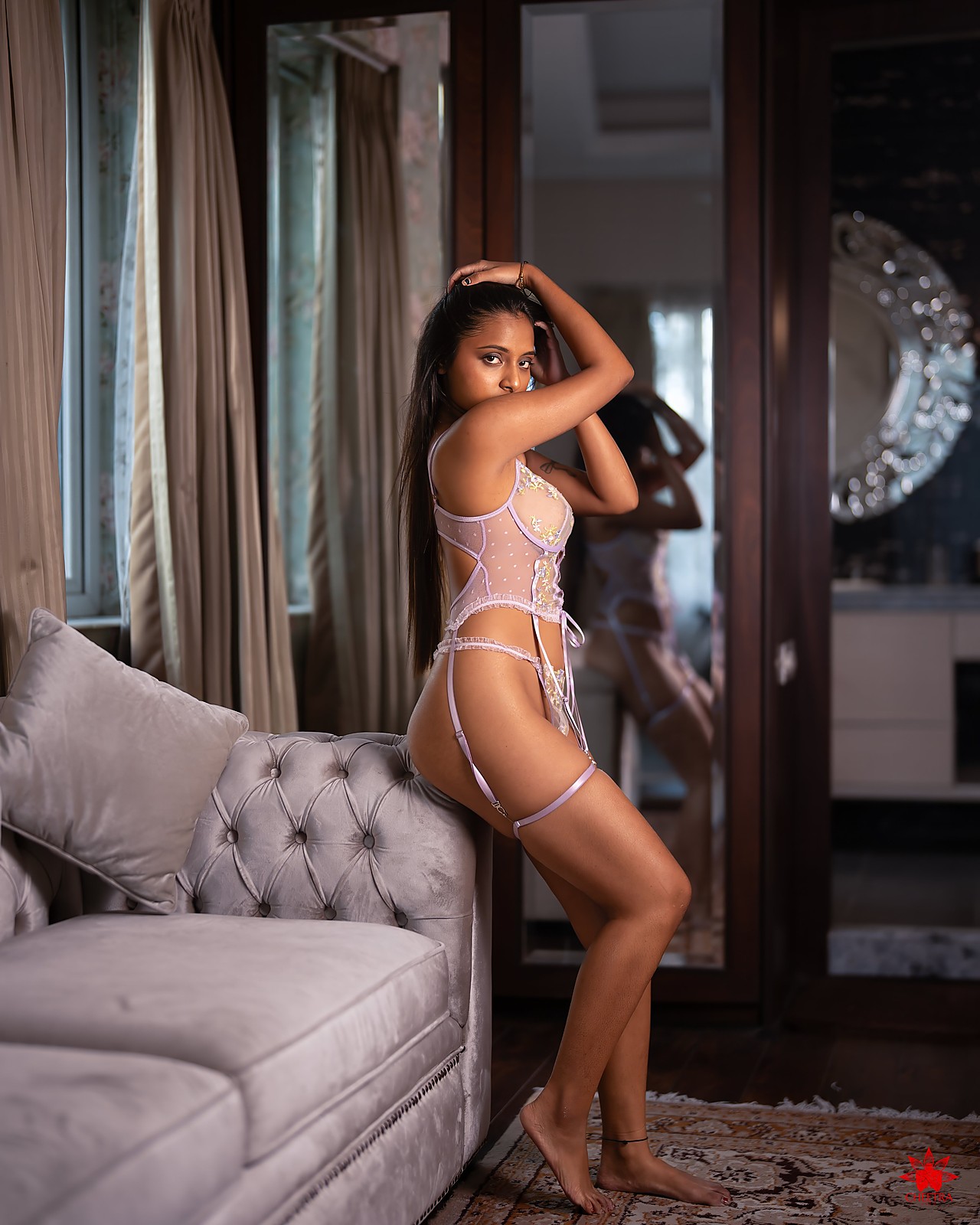
Sreeja's official Cheetraview cover offers a concrete SFW example. She stands beside a grey tufted sofa in pale lilac embroidered styling, with raised arms and mirror-lined panels adding depth. The neutral furniture gives the wardrobe room to read, while the reflected geometry creates a more layered frame. Those visible elements support the cinematic quality; there is no need to invent a fictional scene or emotion around them.
Light the face before shaping the room. Place the key light where it gives the eyes, cheeks and jaw a readable structure, then add background colour or practical lamps with restraint. Check skin tone without removing the ambient colour that makes the setting distinctive. In Indian model photography, deeper skin tones deserve the same careful exposure and colour review as every other subject; a stylised grade should not erase natural variation.
Direction can stay small. Ask the model to shift weight, turn the shoulders or move the hands through one repeatable action rather than holding an elaborate position. Photograph the transitions as well as the final pose. A cinematic frame often feels alive because the gesture appears to be continuing beyond the shutter, not because it copies a movie still.
Use the location honestly. Kolkata boudoir photography can carry a sense of place through real interiors, colour and design without depending on a landmark. Remove distracting objects, but keep details that explain scale and atmosphere. A mirror, chair or textured wall should contribute to the composition; if it competes with the model, change the camera position before relying on retouching. For a separate example, see Tania’s portrait framed by pale bedding, warm curtains and striped furniture.
Plan the public crop during the session. Capture a wider safety frame for the homepage or Journal card and a vertical alternative for a model profile. Keep hands, wardrobe details and important furniture away from the edge when several formats are expected. For boudoir photography in India, confirm coverage and intended audience for each version so the public Cheetraview image remains SFW.
This human-led approach gives every model story a distinct identity. The Cheetraview homepage introduces the studio, the lookbook shows variations in light and setting, and Sreeja's official profile preserves her credit, including the recorded alias Srija. Readers who want to continue can view current public previews and membership information on the official Cheetraview Patreon page.